Bird Flu - the basics
For my first blog post, I have decided to tackle a topic that never seems to leave the media: Bird Flu (or swine flu as they are essentially the same virus for different animals, which I didn’t know before looking further into it). Bird flu is constantly in the spotlight, perhaps due to intensive agriculture and poor welfare conditions in which chickens live? I’ve realised that I will not be able to get all of the information on one blog post, but I hope this sets down the basics. Anyway, I decided that I was going to have a look into it and this is what I’ve found….
Recently, I came across a News story on the BBC about “Bird flu kills more than 75% of baby seals on remote Australian island, study finds”. This article revealed that despite Australia being the “only continent with no cases of the H5N1 strain”, the virus had now spread all of the way across the world as now “six species had tested positive for the H5N1 strain.”
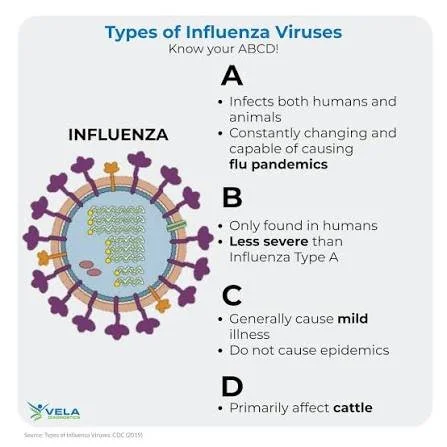
Bird Flu (or Avian influenza virus if you want to be fancy) belongs to the species Influenza virus. There are 4 different types of Influenza: A, B, C and D. Bird Flu is caused by Influenza A. Influenza A is the best at causing Flu outbreaks. Bird Flu is an example of a zoonotic disease, which is a disease that can be spread between animals and humans.
It has a single stranded RNA genome and surface glycoproteins.
What does that mean? This genome is a “type of genetic material found in certain viruses that consists of one single strand of ribonucleic acid”. So it relates to viruses
And glycoproteins?: “a type of protein that has sugar chains attached to it”. This means that they are able to hook onto the host cells and hence infecting them (whilst having a disguise on).
Strains?
Whilst researching them I kept finding weird code combination type things next to them (very scientific way of describing it I know). This determines the type of Influenza A that you are dealing with. This can be from H1 - H18 and N1 - N11. These combinations refer to the proteins on the virus coating, hemagglutinin and neuraminidase and so how the virus can enter the body.
Luckily, only strains with H number of 5 or 7 can be highly pathogenic. Not so luckily, some of the most common are H5N1 (like that of the recent article) and H7N9 (which broke out in March 2013 in China and became more prominent in 2017).
Types of bird flu: HPAI (highly pathogenic) and LPAI (lowly pathogenic). Weirdly enough LPAI is not a serious condition in many species. The worst it can really do is ruffle some feathers for a few days! Unfortunately, both H5 and H7 are both HPAI. Therefore they can kill very quickly.
Symptoms
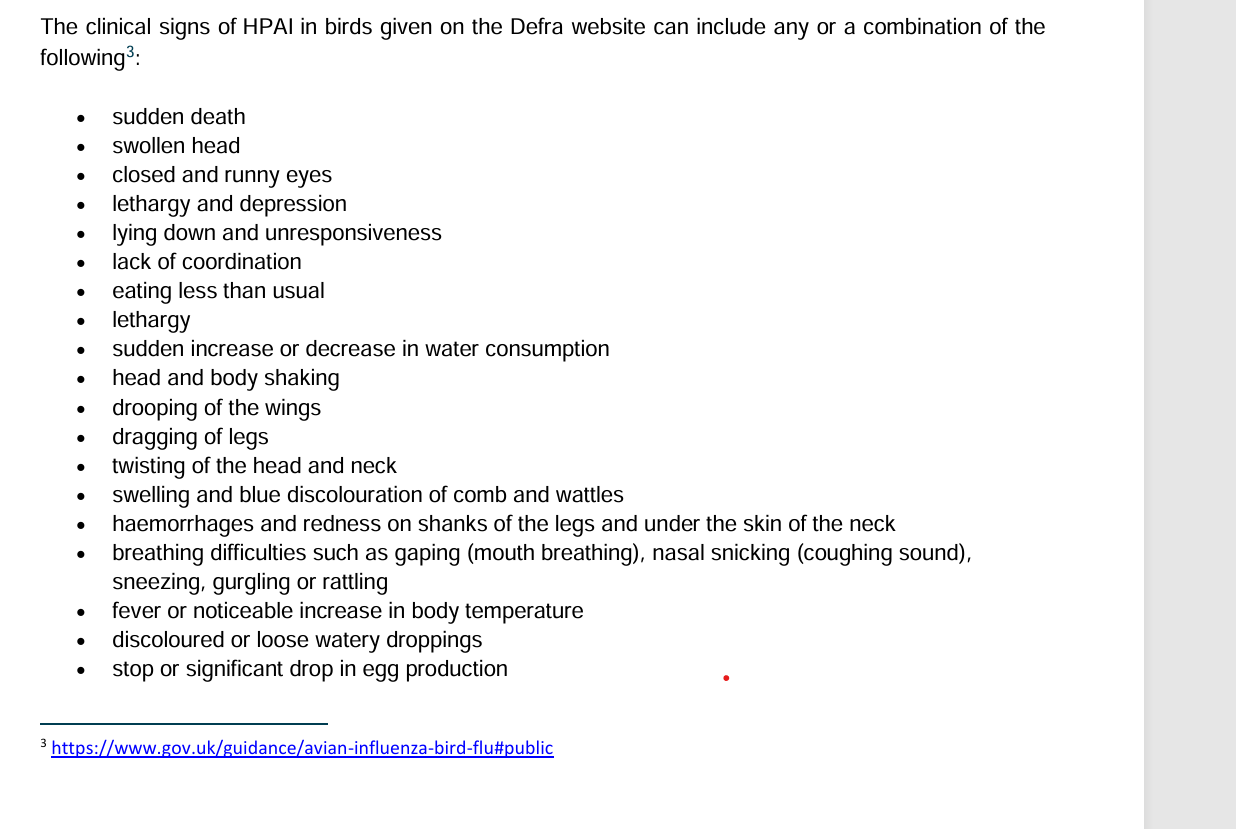
The association itself admits “the list is clearly extensive and could cover a whole variety of clinical conditions across all species of birds”.
This means that it could be difficult to diagnose.
Which Animals it actually affects?
Firstly and most obviously, it affects domestic poultry (chickens, geese, ducks ect.).
Wild Birds are another big group that the virus affects. The reason for a lot of the spread of the virus is because of migrating birds
Dairy cows have been one of the main groups to contract the H5N1 virus.
Cats (this group is at “particular risk for severe respiratory and/or neurological illness that is often fatal”)
Bats
Many other mammals, both wild and domestic
Affect on people
So, does it affect humans?
Yes, but not for the most part.
From 1997 - 10th June 2026, only 1022 cases of Avian Influenza have been reported worldwide, with the H5N1 causing the majority of all cases.
Thankfully, cases of Bird Flu are very rare in humans. However, the new mutations of the virus seem to be spreading to more and more mammals (such as the rise in cases in dairy cows and cats in the H5N1 strain), begging us to consider whether we will be next.
The Veterinary Response
At the heart of the response of vets is something called biosecurity. Biosecurity is defined as “the steps taken to stop harmful living things—like viruses, bacteria, pests, or invasive species—from spreading to people, animals, plants, and places.”
This means when vets deal with cases of Avian Influenza, hygiene and PPE are used to ensure that the disease does not spread. This such as disinfectant and footbaths to prevent the spread of the virus are essential.
Defra (The Department for Environment, Food and Rural Affairs) ask that vets report cases of dead wild birds in suspected bird flu cases. Sadly, in wild birds, the response to Bird flu is euthanasia.
Antigen tests can be used to confirm the presence of Avian Influenza. They look for specific proteins (such as the H and N) on the virus. This means that the infection can be detected. Antigen tests were used to detect a lot of the Covid cases. They are quick and cheap, however, sometimes they can be inaccurate so it is important to be careful when looking at these tests.
There is not currently a vaccine for poultry but there is a vaccine against the virus for birds kept in zoos. The reason that the vaccine is not offered for poultry is that it is not 100% effective and so vaccinated birds still have a chance of contracting the virus. This may lead to a false sense of security against the virus leading to the relaxing of biosecurity measures which would lead to another outbreak. There is still much debate about this. In Italy, there has been a trial of vaccines in Turkeys with the results still pending.
https://www.bva.co.uk/media/5996/ai-guidance-for-vets-july-2024-2.pdf
https://todaysveterinarypractice.com/infectious-disease/avian-influenza-and-feline-patients/
https://www.cdc.gov/bird-flu/spotlights/global-summary-06262026.html